Products Risk Insights Mobility Metrics Analysis Mobility Metrics Tracker Gaze Metrics Analysis Dynamic Care Plan
Solutions Senior Living Longevity Clinics Concierge Medicine Rehab & Post-Acute
Sign in Request a Demo →

Gaze Metrics Analysis

The neural signal
your brain
can't hide.

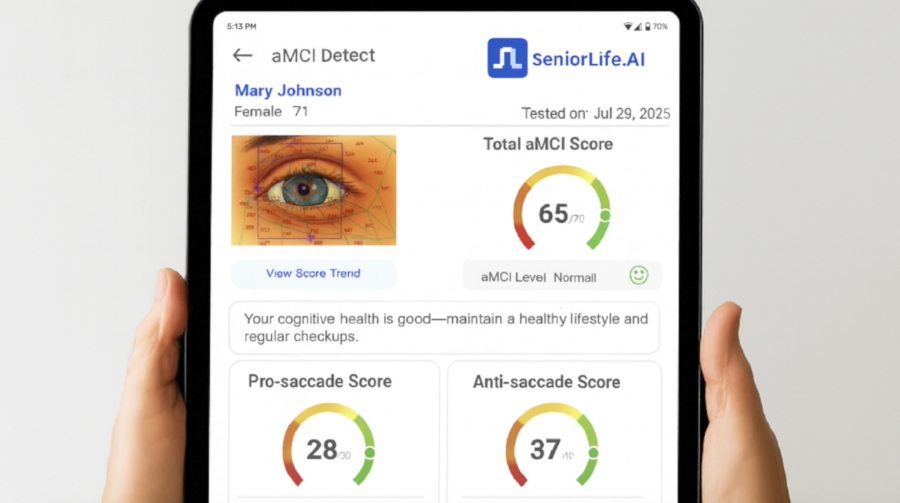
A 5-minute iPad assessment that reads the eye movement responses your brain controls involuntarily — building a personalized cognitive baseline that sharpens with every visit.

5 min iPad Assessment No external hardware needed
<17ms Gaze Precision Millisecond-level eye tracking
Baseline → Trend Longitudinal Intelligence Each session sharpens your cognitive picture

Wellness assessment, not a medical device. Not intended to diagnose, treat, cure, or prevent any condition. Results should be reviewed with a qualified healthcare professional. Read full disclaimer →

A Different Category of Data

Memory tests measure what you remember.
This measures what your brain does.

Standard cognitive performance test
Performance Testing

Cognitive Performance

Measures how well you answer questions and recall information
The brain compensates — a sharp person under early cognitive pressure can still score well
Catches change only after the brain can no longer compensate
Gaze Metrics
5-min gaze assessment on iPad
Neural Biomarker

Neural Circuit Health

Measures involuntary saccade responses — signals the brain cannot fake or compensate for
Reflects the health of the neural circuits that decline earliest
Detects directional change before any performance test would flag concern

The Diagnostic Gap

Standard tests were built
for a different problem.

Every standard cognitive test measures performance — how well you answer, not what your neural circuits are doing. The brain compensates. The test misses it. The saccade response doesn't.

MMSE pen-and-paper test
Pen & Paper

MMSE

Built for moderate-to-severe impairment. Misses early-stage change entirely.

Key limitation: False negatives precisely when early detection matters most.
MoCA clinician-administered test
Clinician-Scored

MoCA

Better than MMSE. Still measures performance, not neural health. Clinician-dependent and education-sensitive.

Key limitation: 57–76% sensitivity for early MCI.
Computerized cognitive test
Screen-Based

Computerized Tests

Better standardization. Still performance-based. A motivated person compensates long after their neural circuits have started shifting.

Key limitation: Performance ≠ neural health.

What We Measure

Three signals.
One neural picture.

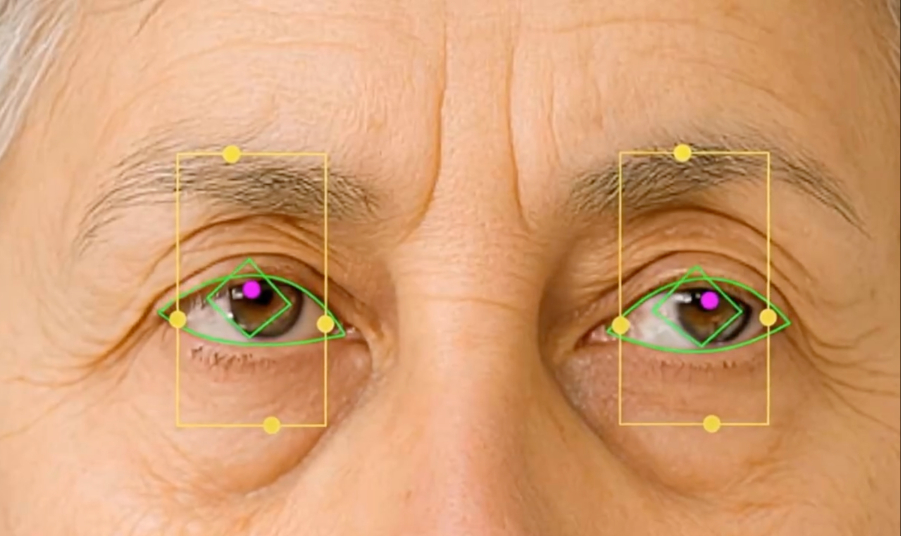
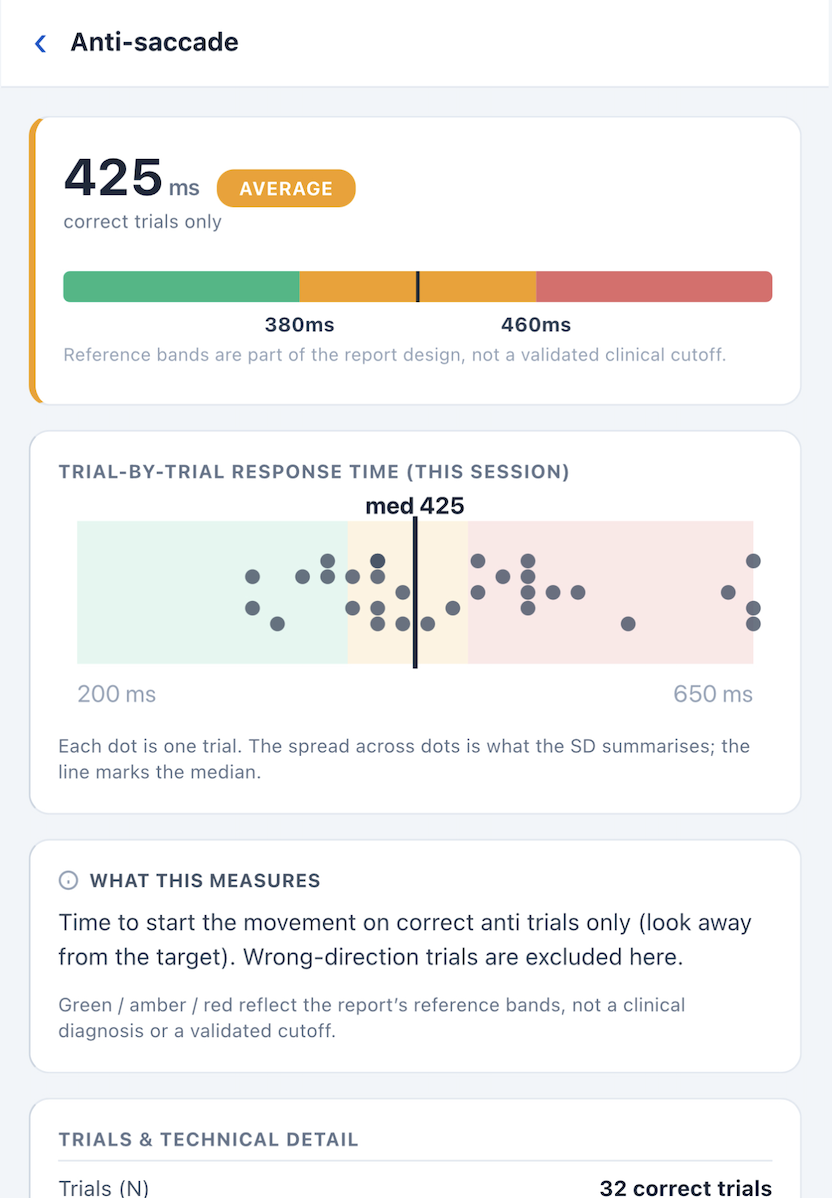
Using pro-saccade and anti-saccade paradigms, we track three involuntary eye movement parameters that reflect the health of the frontal and oculomotor neural circuits — the ones that decline earliest.

Latency

Time from cue to first eye movement. Slowing latency is the earliest detectable neural signal.

Peak Velocity

Maximum saccade speed. Drops reflect circuit integrity before any performance test would catch it.

Error Rate

How often the reflex fires when it shouldn't. Requires active neural inhibition — errors here are among the earliest markers available.

How It Works

Five minutes. One iPad.
No extra hardware.

1
iPad gaze calibration

Calibrate

The iPad camera calibrates to the individual's eye position in about 30 seconds. No wearables, no sensors, no specialist required.

2
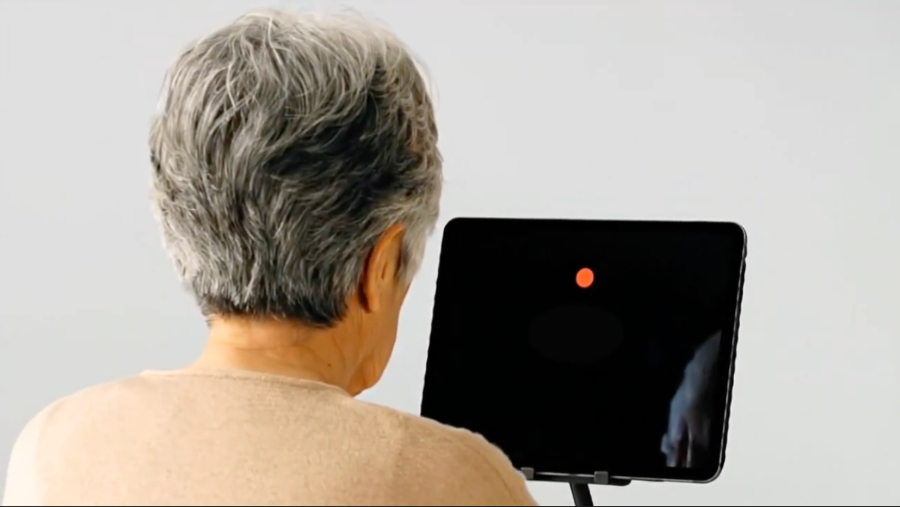
Active saccade test

Assess

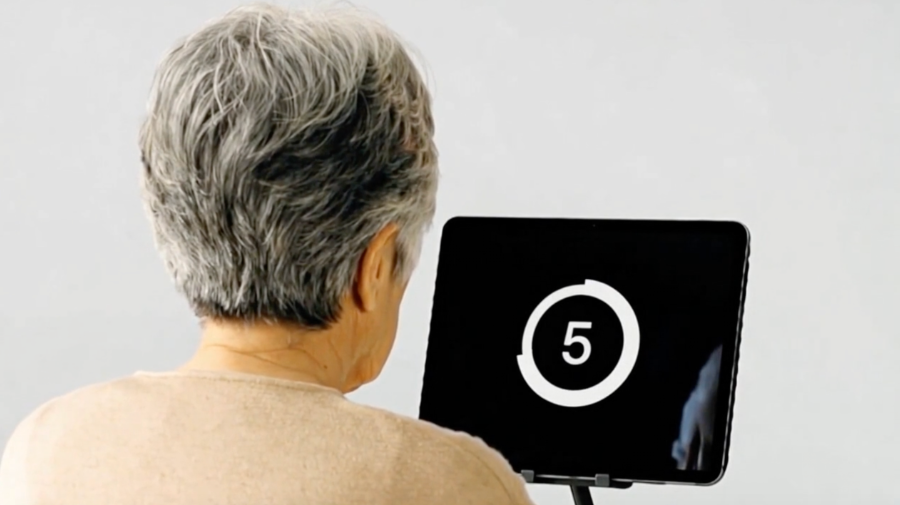
Visual cues appear on screen. The app tracks gaze latency, velocity, and inhibition error across both saccade paradigms. The whole assessment takes under 5 minutes.

3
Results and action plan

Review

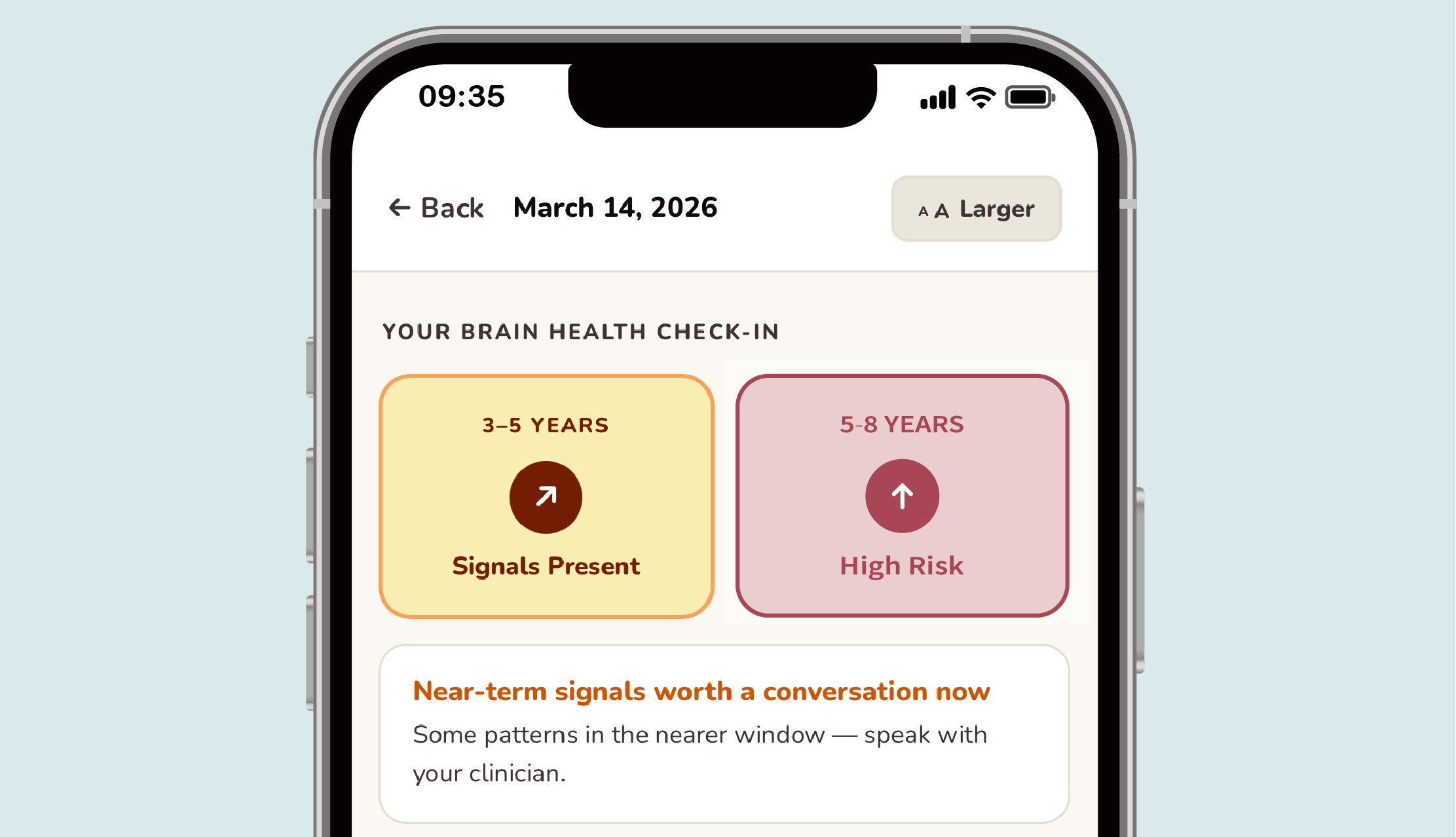
AI scores the session and generates a wellness tier, a biomarker breakdown, and — where relevant — personalised lifestyle recommendations based on established research.

Longitudinal Intelligence

One session gives a signal.
Repeat sessions define a trajectory.

Early cognitive change doesn't announce itself with a threshold crossed. It shows as drift — a subtle, consistent directional shift across sessions that no single measurement would flag. That's what the model is built to detect.

Baseline

Your individual neural baseline is established — calibrated to your age, education, and health profile. Not compared to a population average. Compared to you.

Emerging pattern

The model begins distinguishing stable individual variation from early directional change. Noise from signal.

3+

Confident trajectory

A high-confidence trend line — stable, improving, or drifting. Something to act on, not just a number to file away.

Why Now

The methodology is proven.
The delivery is new.

Saccade biomarkers for early cognitive detection have been studied in clinical research settings for years. The science is not new. What's new is making it accessible — a 5-minute iPad assessment with no specialist, no hardware, and no waiting room.

Proven science. First time it fits in a clinic.

Most members have never had a neural baseline. Clinics that start now will have two years of longitudinal data before anyone else.

Early detection creates a window.

Lifestyle interventions started early — training, activity, sleep, nutrition — can slow the trajectory. Started late, they can't.

The data advantage compounds.

Every session adds to the model. The earlier you join, the stronger your evidence base.

Personalised cognitive wellness plan screen

Get Started

Ready to see it
in your setting?

Request a personalized demo or ask about free evaluations for your members.