Functional Intelligence Early Signals Mobility Intelligence Cognitive Intelligence Dynamic Action Plan
Solutions Home Care Senior Living Rehabilitation Primary Care Longevity Clinics
Partners Partners
Company About Us Contact
Sign in Request a Demo →

Identify cognitive change
early, through
eye movement.

Identify early cognitive change and track it over time — from a short iPad assessment that measures involuntary eye-movement responses. Gaze measurement is in beta.

5 min iPad Assessment No external hardware needed
<17ms Gaze Precision Millisecond-level eye tracking
Baseline → Trend Longitudinal Intelligence Each session sharpens your baseline

A Different Category of Data

Performance tests measure how you answer.
This measures how your eyes move.
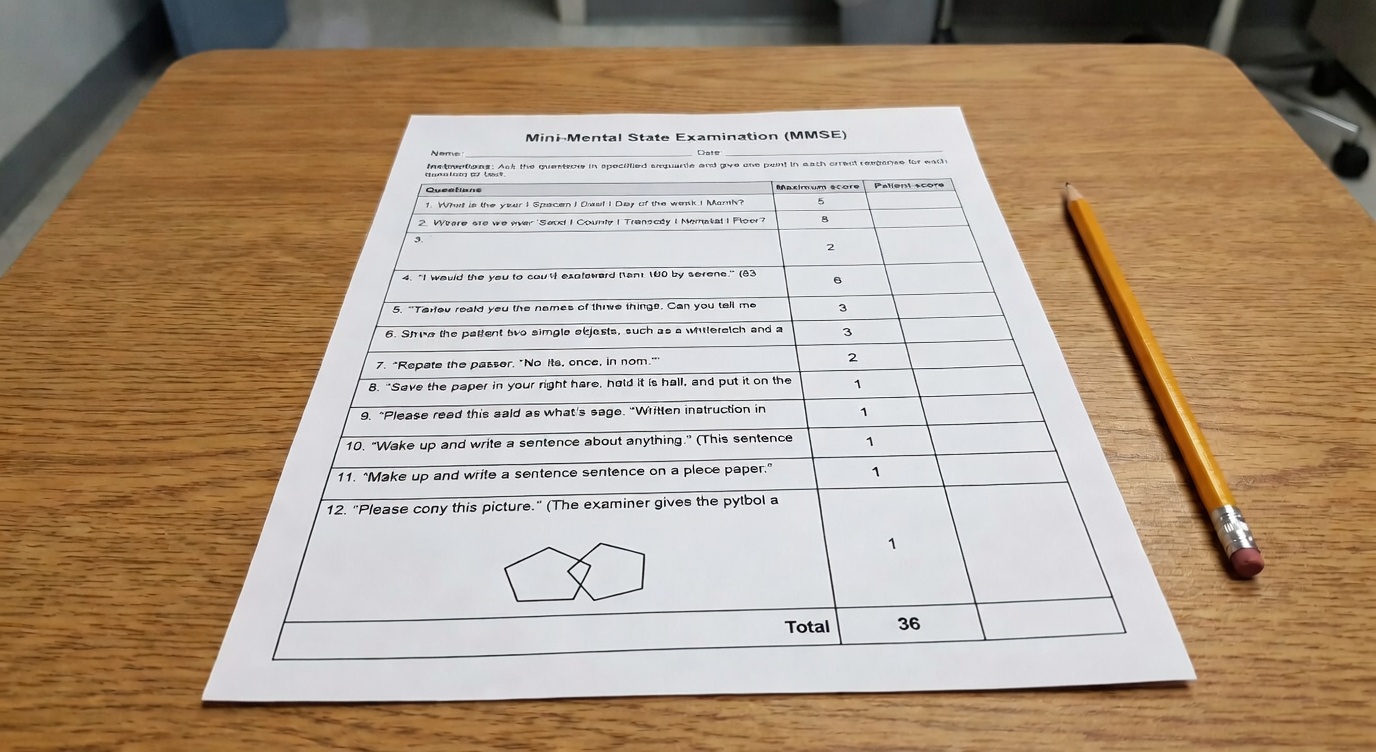
Standard cognitive performance test
Performance Testing

Cognitive Performance

Measures how you answer questions and recall information
Sensitive to motivation, education, language fluency, and test-taking familiarity
Captures change once it shows up in measurable answers
Gaze Metrics
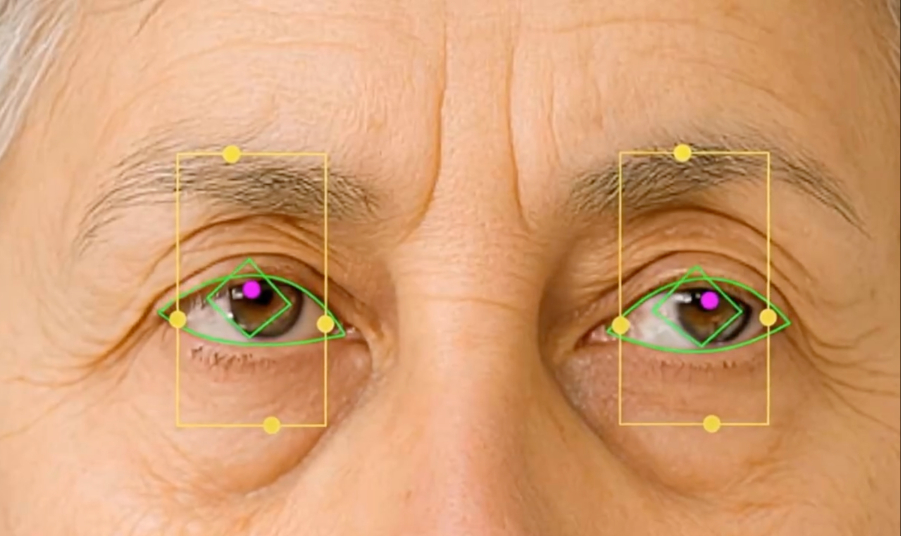
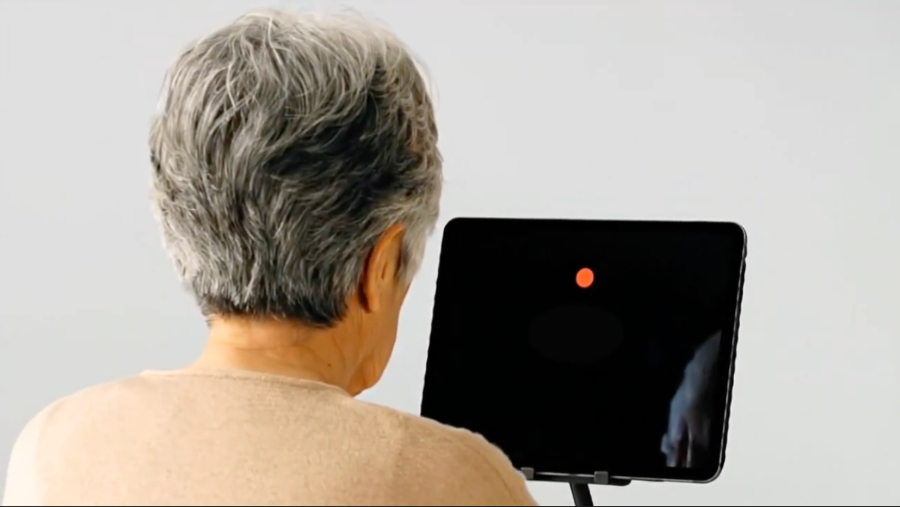
5-min gaze assessment on iPad
Physiological Measurement

Eye-Movement Response

Measures involuntary saccade responses — eye movements that aren't under conscious control
Independent of education, language fluency, or test-taking skill
Captures response timing at millisecond resolution across structured prompts

Measurement Methodologies

Different tools
measure different things.

Most cognitive screening tools measure performance — how a person answers structured questions. Saccade measurement captures something different: physiological eye-movement responses, recorded automatically.

MMSE pen-and-paper test
Pen & Paper

MMSE

30-item brief mental-status questionnaire. Self-administered with clinician scoring. About 10 minutes.

Format: structured Q&A · ~10 min
MoCA clinician-administered test
Clinician-Scored

MoCA

Multi-domain screening across attention, memory, language, and executive function. Clinician-administered. Roughly 10–15 minutes.

Format: clinician-led · ~15 min
Computerized cognitive test
Screen-Based

Computerized Tests

Standardized digital assessments measuring response time, accuracy, and pattern recognition. Self-administered. Variable length.

Format: self-administered · variable

What We Measure

What eye movement
reveals.

During a short set of structured tasks, we measure involuntary eye-movement responses — signals a person can't consciously control — and combine them into a single cognitive signal.

Response time

How quickly the eyes react to a cue — the primary signal in the assessment.

Speed

How fast the eyes move once they start — a secondary, supporting measure.

Accuracy

How often the eyes move when they shouldn't — a measure of inhibition.

How It Works

Five minutes. One iPad.
No extra hardware.

1
iPad gaze calibration

Calibrate

The iPad camera calibrates to the individual's eye position in about 30 seconds. No wearables, no sensors, no specialist required.

2
Active saccade test

Assess

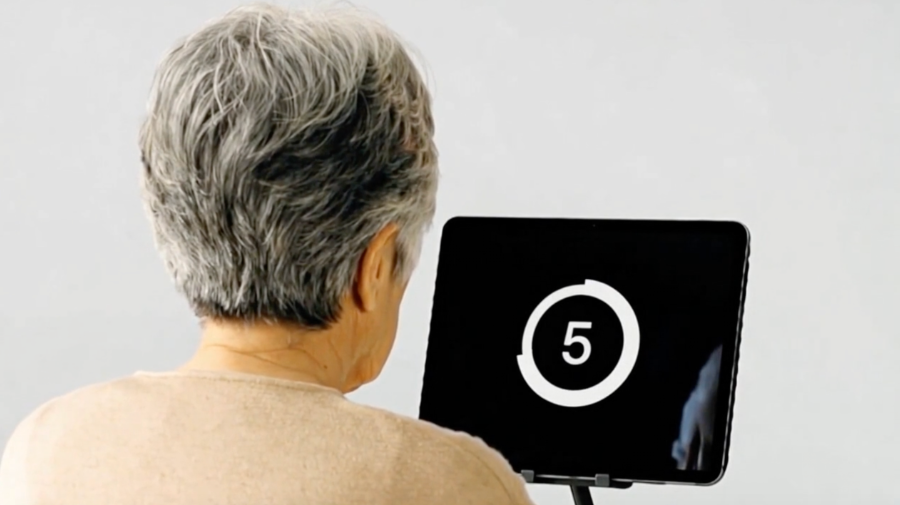
Visual cues appear on screen and the app measures how the eyes respond. The whole assessment takes under 5 minutes.

3
Results and action plan

Review

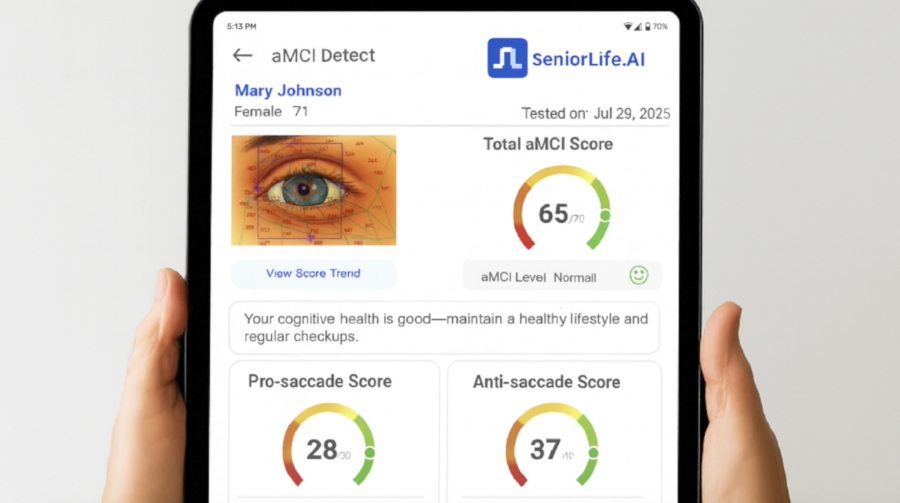
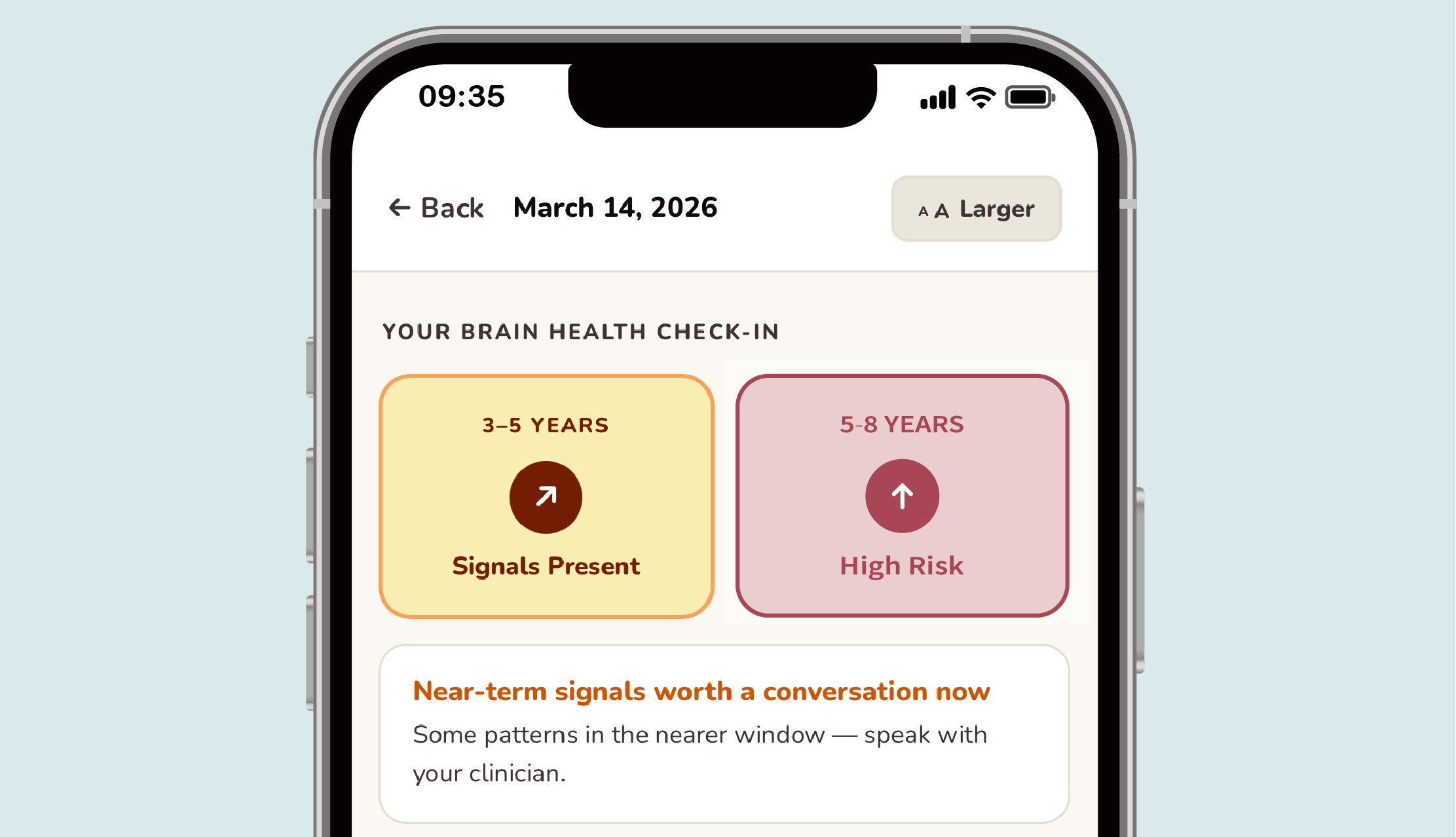
The session is scored into a clear cognitive result tier and measurement breakdown, and set against prior sessions so change over time is easy to read.

Longitudinal Intelligence

One session gives a signal.
Repeat sessions define a trajectory.

Meaningful change rarely shows up in a single session. It shows as drift — a subtle, consistent directional shift across sessions that no single measurement would flag. That's what the model is built to detect.

Baseline

Your individual baseline is established — calibrated to your age, education, and health profile. Not compared to a population average. Compared to you.

Emerging pattern

The model begins distinguishing stable individual variation from early directional change. Noise from signal.

3+

Confident trajectory

A high-confidence trend line — stable, improving, or drifting. Something to act on, not just a number to file away.

Why Now

The science is established.
We make it simple to capture.

Saccade-based eye-movement measurement has been studied in research settings for decades. SeniorLife delivers it as a short iPad assessment with no specialist and no extra hardware — with the gaze measurement currently in beta. The output is an early signal, not a diagnosis.

Established measurement, delivered simply.

Most people have never had a saccade measurement baseline. Starting now means years of comparison data before anyone else has any.

A baseline you can track over time.

An individual baseline gives you a reference point to see whether cognitive function is holding steady or drifting over time — well before a single reading would show it.

A longer record shows change more clearly.

Every session adds to your personal record. The longer your measurement history, the more confidently you can read change.

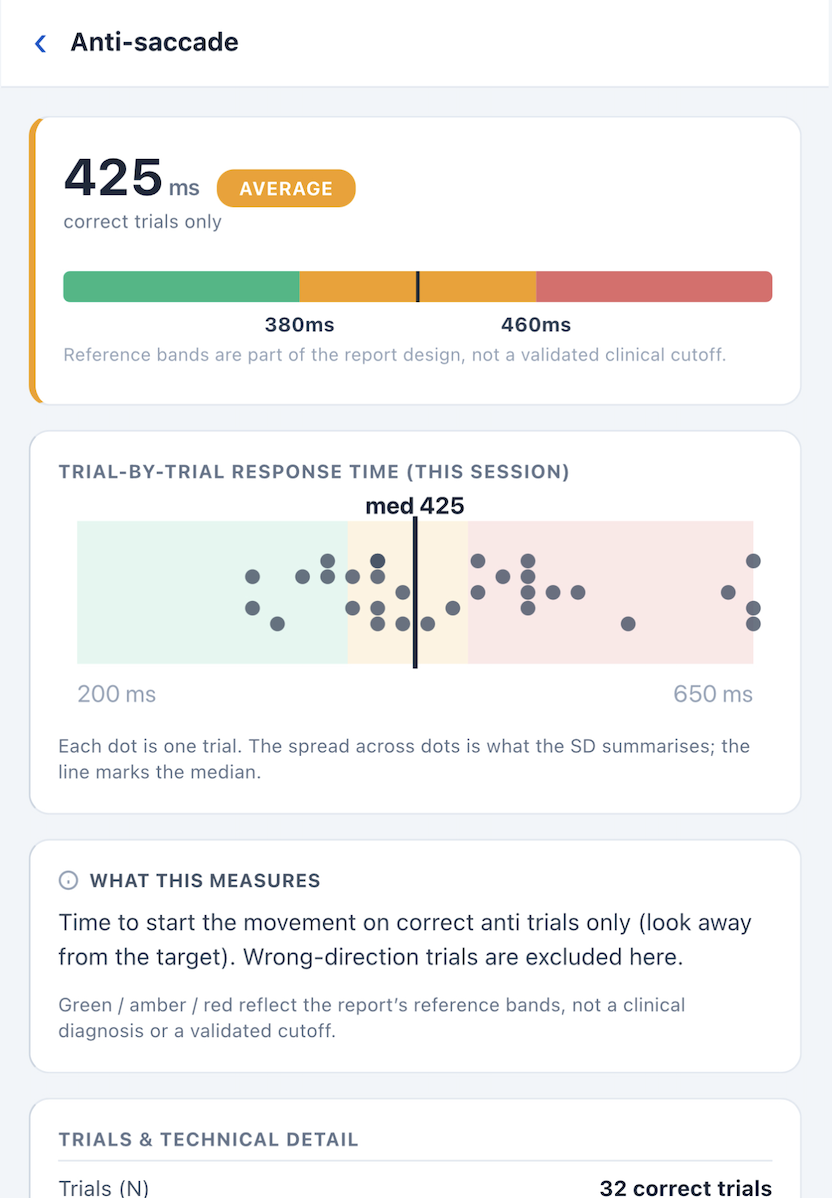
Anti-saccade timing — cognitive early-signal screen

Get Started

Ready to see it
in your setting?

Request a personalized demo, or see how Cognitive Intelligence fits into the care workflow you already use.