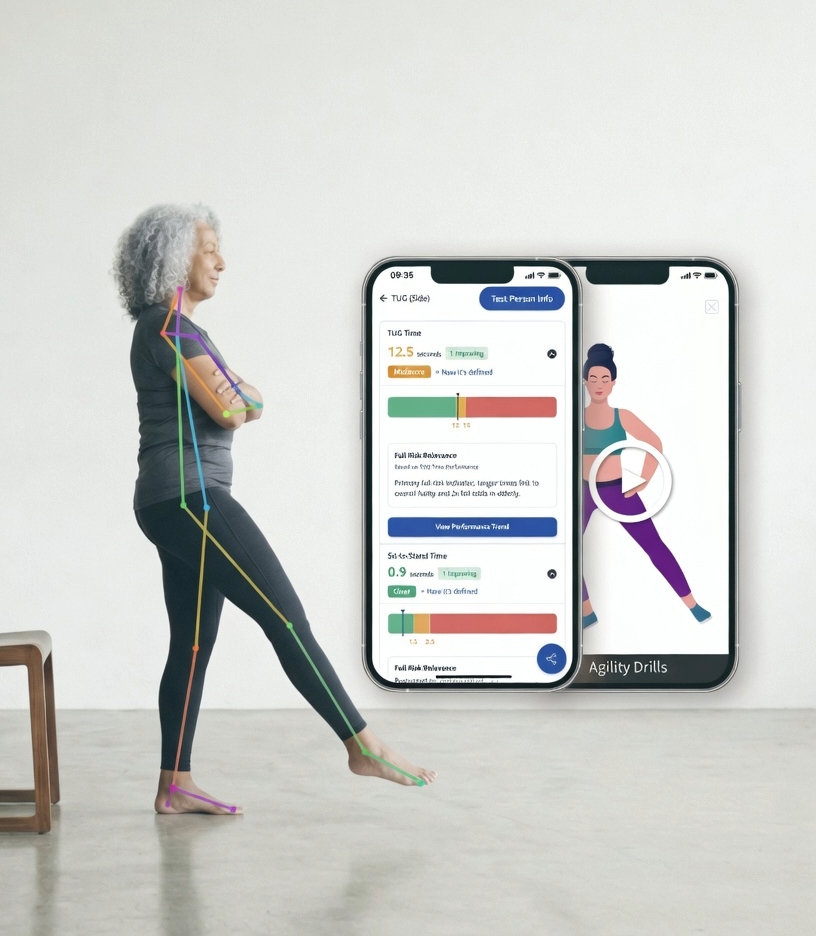
A 20-second video becomes objective mobility — current status, where support may be needed, and change over time. The metrics underneath are the evidence, not the point.
Objective Function
The same measurements mean different things depending on the person. SeniorLife reads each result against the person's history, medications, and prior function — so the same score can point to very different support needs.
For everyday safety and independence — transfers, walking, steadiness, and the movements daily life depends on. Each scenario is read across the domains that matter most, surfacing the weakest link to address first.
For people recovering or working to stay active — after surgery, a fall, or a period of decline. The same domains show whether function is returning, holding, or slipping, and where to focus support.
How It Works
A short guided video — read in the context of the person's history — becomes objective function, support needs, and change over time. See it in 20 seconds.
Mobility Intelligence — Walkthrough
Short video → domain scores → support needs → change over time · Click to play
Detailed biomechanical measurements read in the context of each person's health history, medications, and prior function.
An overall tier and per-domain breakdown — with session-over-session trend charts showing direction of change.
Recommended next steps delivered to the care team — and fed directly into the Dynamic Action Plan layer.
Actionable Output
Every result is read from the combination of domain scores and personal history — so a person with low foot clearance and a history of ankle surgery is understood differently than someone with the same score and no injury history.
Get Started
Request a personalized demo, or see how Mobility Intelligence fits into the care workflow you already use.